I recently went to visit the old apothecary –
L’Apothicairerie de l’Hôtel-Dieu-le Compte - situated in one of the former hospitals of Troyes. It was a fascinating experience, not least for the fact that it revealed to me just how little I actually knew of the history of European medicine! I vaguely imagined the work of early physicians and ‘healers’ to resemble some kind of gruesome witchcraft, conjuring up images of Shakespeare’s hags in Macbeth.
Double, double toil and trouble;
Fire burn, and caldron bubble.
… Fillet of a fenny snake,
In the caldron boil and bake;
Eye of newt, and toe of frog,
Wool of bat, and tongue of dog,
Adder's fork, and blind-worm's sting,
Lizard's leg, and owlet's wing,—
For a charm of powerful trouble,
Like a hell-broth boil and bubble.
As I read about the original contents of the beautiful containers, canisters, pots and jars on display around the walls of shelves at the
apothicairerie, that ghoulish image was not entirely dispelled… on the contrary! However, the impression left went far beyond that. True, many of the remedies on offer would, at best be totally unpleasant yet utterly ineffective, whilst others were more likely to endanger or kill the patient than cure him of any malady. Nevertheless, the debt of modern-day health care and prevention can be traced back to a number of these centuries-old treatments exhibited here.

It may be hard not to scoff (or indeed retch) at the practice of using ground human skulls, dogs’ excrement, virgins’ milk, snails’ froth, spiders’ webs, skinned vipers, crabs’ eyes, embalmed mummy pitch, Alexandrian chimney soot and peacock droppings to combat contagion and ailment. However, alongside these skin-crawling cauldron slops are treatments that are precursors to those still used today against a wide range of ills, from life-threatening malaria (Peruvian quinquina bark) to the troublesome insomnia (Valerian root). Many of the herbal and mineral extracts that form the basis of today’s multi-million-dollar dietary supplement trade, had been appreciated for their beneficial qualities many hundreds of years ago.
 |
| Preparation room of the apothecary... |
It is ironic to see how much accurate information on general health and well-being is available to anyone and everyone today and yet how little of this we actually take heed of. For all our superior knowledge and our independence from the natural world today, we have become strangely disconnected from the natural, and are even out of touch with our own bodies and their normal functions. Our supposed superiority over Nature is contradicted by our pursuit of lifestyle choices that demonstrate very little wisdom or even basic common sense. Many of us seem to become the sum of the physical and/or mental issues from which we consequently suffer. It seems that we could benefit a great deal by simply reconnecting with some of these traditional practices which may well figure in the health food or ‘alternative’ domains today, but are no longer part of a standard health regime. That said, probably best to give those arsenic, bat dung and beaver testicle remedies a miss…..

So, back to the apothecary… The
Hôtel-Dieu-le Compte was set up during the period of great prosperity and growth that arose with the emergence of the Fairs (
Foires) of the Champagne region in the 12th century. As towns and cities expanded in line with the commercial possibilities, ever greater numbers of people were drawn towards urban life, bringing, in turn, their own lot of misery, misfortune and malady. As a centre and crossroads for such trade and activity, the city of Troyes was no exception.
 |
| Saint Florentin - Sculpted wood polychrome reliquary - 16th century Troyes |
The
hôtel-Dieu along with the other hospitals of the city, was run by the Order of Saint-Augustin. Generally speaking, until the 16th century, only ecclesiastic institutions offered any kind of care to the sick and needy. In fact, these were part of a long tradition of Christian hospitality and charity, dating back to the 9th century. Indeed, monasteries offered the ‘
Service de la Porte’ (so called because this space was situated next to the main entrance) indiscriminately to all those who required food, temporary lodging and basic care. This charitable provision later extended and branched out to form hostelleries, hospices and later the
hôtel-Dieu – the
xenodochium (from Ancient Greek; 'place for strangers').
Offering shelter and succor to those who possessed nothing and had no one on whom to rely was not just a mark of Christian compassion. Each ill, infirm and impoverished individual was considered to represent Christ in his suffering. Therefore the nursing of such beings and, above all, the salvation of their soul was the ultimate act of Mercy -
Caritas. These charitable deeds were also a means of redemption for those administering the care, directly or indirectly. Seen in this context, it is hardly surprising that great emphasis was placed on spiritual healing in these
hôtel-Dieu, nor that nursing fulfilled an essentially religious role.
 |
| Bust of Saint Marguerite - Polychrome scultped wood |
The mortality rates therein must have been formidably high and therefore prayer probably represented the only real hope for survival. The charges were crowded into dormitories in the chapel-style wards in order to participate in the religious services, including confession. One bed could indeed house several occupants! As there was a less than rudimentary understanding of basic hygiene and sanitation, such conditions could only reinforce physical discomfort and favour the spread of contagious disease and the
hôtel-Dieu would often prove to be breeding grounds for the most unpleasant diseases and ailments, right in the heart of the city. Furthermore, these carers could not rely on the greater experience and expertise of a doctor for support since there were no licenced medical professionals, in the modern sense of the term.
There were, of course, physicians among the clergy, ready to use their skills in order to find a remedy for an ailment and propose a suitable treatment, with apothecaries formulating and dispensing the ‘drugs’ required. Indeed, the services of such ‘physics’, along with those of the barber-surgeons, bone-setters, tooth drawers, mid-wives, wise women and so on were naturally in high demand. Nevertheless, such craft was not backed up by recognized, regulated training and was sometimes no better than that proposed by unscrupulous quacks. There was little or no homogeneity within these separate categories of medical care and as these groups tended to overlap, it was sometimes difficult to differentiate between them and virtually impossible to set any code of practice. Besides, much, if not all the medical know-how of the early physicians was drawn from the healing practices that had been carried out in many European monasteries for centuries, so it failed to break new ground.
 |
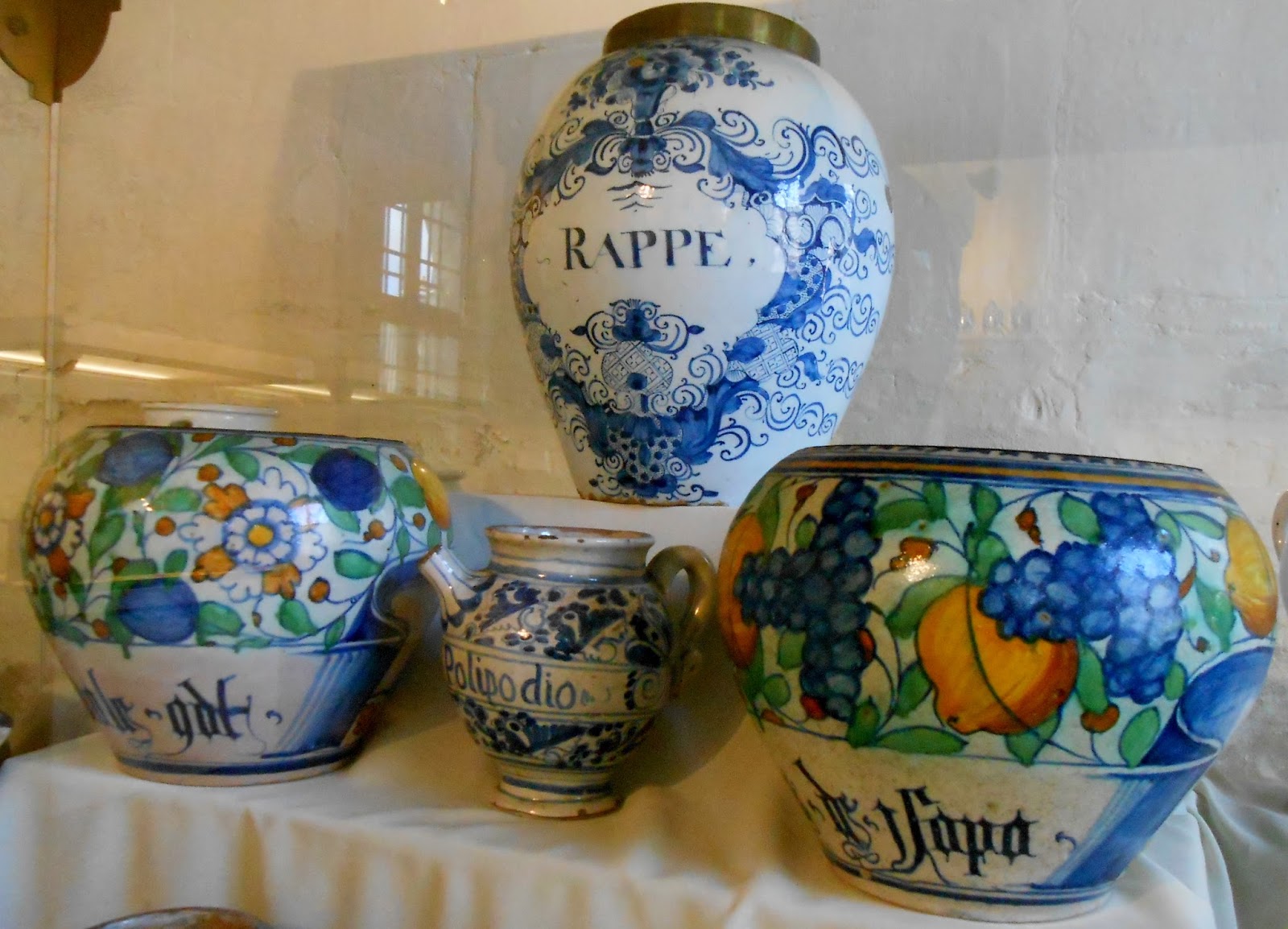
| Albarello jars |
The fall of the Roman Empire in the 5th century meant that Western Europe had largely lost access to the learnings of the Greek and Roman civilisations in the fields of medicine and healing. Pagan superstition, folk practices and even astrological speculation would form the basis of the understanding and treatment of illness and disease in the Dark Ages, from around the 5th to the 10th century. Yet parallel to this somber art, the early Western medicine started to germinate, within the very gardens of the monasteries. The Roman statesman and writer, Cassiodorus (c. 490 – c. 585), played an important role in the creation of what could suitably be referred to as the ‘monastic medicine’ of the Middle Ages; there was no other viable form. On his retirement, he founded the monastery of Vivarium by the shores of the Ionian Sea, and focused his writings on the question of religion, the improvement of religious knowledge and its transmission. Within the monastery, he promoted gardens –‘hortus’ – which cultivated wild herbs and plants – ‘simples’ - with medicinal properties. Cassiodorus recognized that these ‘simple’ gardens could help the monks fight afflictions of the body and mind, while God himself, as ‘Divine physician’ would heal the spirit. The study of the healing virtues of plants and other medicinal substances, and the annotation of their properties in herbal handbooks therefore became part of a long monastic tradition, and was at the origin of the discipline of botany and modern-day pharmaceutics, not to mention phytotherapy and homeopathy. For the first time, medicine appeared as discipline in its own right on the study programme for monks, and the translated works of ancient erudites, albeit limited in quantity, were integral to this learning process.

The influence of the herbal gardens of the Vivarium spread from Italy so that by the 8th century similar cultivation were to be found in monasteries and convents around Europe. The Holy emperor Charlemagne, himself a learned man, ordered the systematic collection, observation and cultivation of medicinal plants in the royal garden. Little by little, an
apotecarius, acting as physician and pharmacist, assumed an important role in monasteries and convents. Meanwhile, different branches of the preparation of plant extracts (flowers, leaves, roots, bark, seeds or fruits) and mineral substances grew in number, and increasingly tended to grow away from the ecclesiastic establishments. Under various names – 'speciarii', 'piperarii', 'apothecarii', 'aromatorii' – vendors specializing in the sale of a myriad of substances and remedies opened shop in fixed premises from the 11th century onwards, thus distinguishing themselves from itinerant charlatans.
 |
| Albarello jars on apothecary storeroom shelves.... |
The apothecary stocked and dispensed
materia medica from the
apotheca, the Latin term for warehouse or store. Indeed, the trade involved the import, storage, weighing and distribution of small quantities of this wide range of goods, in line with the physician’s prescription. In this respect, the apothecary differed from the grocer. The latter may have sold similar wares, spices for example, but tended to sell in bulk and was known as a spicer
en gros (grocer), after the standard measure – the
peso grosso. Nevertheless, the confusion of the two persisted, in part due to the fact that the two were members of the same corporation. It became increasingly necessary for the apothecaries to defend their practice from other tradesmen who were ready to encroach on this somewhat blurred territory. It may seem odd to us today, but only apothecaries had the right to sell sugar...
The guild community of apothecaries introduced a practical training course for apprentices so that they could master the art of
materia medica from different learning centres. Over a number of years, a novice would learn the essential skills from various masters, his own, then from others when he became an itinerant compagnon. In addition to this, the apprentice was obliged to acquire a basic understanding of Latin in order to follow formulas and respect the prescription requirements. The redefining and reglementation of this as an acknowledged profession, separate from that of the physicians, yet largely under their control, finally began. At the same time, an organized medical profession started to emerge through the advent of Schools of Medicine. The most notable of these schools was set up in Salerno, Italy, in the 11th century and its influence radiated beyond. Medical faculties were founded within other newly-established universities around Europe and in France the first of these to emerge was Montpellier, in1181.
 |
| 'Pilulier' jars |
The establishment of higher places of learning fuelled what is called the 12th century Renaissance and marked a period of significant evolution in medicine. Large
antidotaire or
pharmacopea books explored and exposed the composition, preparation and usage of medical substances. These were drawn up and studied by physicians at the medical faculties and were an attempt to standardize the apothecaries’ work and render their medical preparations more efficient. Over the 12th and 13th century, more than fifty of such reference books appeared, the most famous being that of a certain Nicolas of Salerno.
Physicians began to consider that the preparation of drugs and compound remedies was unworthy of their elite skills, and was indeed more appropriate for the apothecary. Finally the Constitution of Melfi, 1241, officially enforced the legal separation of the two domains.
Just as apothecary would be redefined over the Medieval period due to new tenets, so too would medicine. Gradually, the work of the physician grew away from its ecclesiastic base and became increasingly secular in its practice, whilst the practitioners themselves were no longer principally members of the lower clergy. The sanctions of the religious Councils set limits on the medical intervention of monks and nuns; they could not carry out surgical acts and not surprisingly, were not allowed to practice medicine for lucrative ends. Ultimately the church lost its monopoly over the field it had dominated for 500 years and the Reformation of 1517 furthered this loss. By the 16th century the
hôtel-Dieu of Troyes was managed by Bourgeois notables...
This, indeed, was the beginning of a long period of great renewal and (re)discovery for Medicine, in line with the widening of the world’s horizons through the Holy Crusades and the discovery of new continents and the diffusion of ideas via the printing press. Having been largely severed from the learnings and culture of Antiquity on the demise of the Roman Empire, Western Europe regained a certain access to these. Through contact with the Orient, directly with the Crusades and the flight of Arab scholars following the Siege of Baghdad in the mid-13th century or, indirectly, with Muslim Spain of the Iberian Peninsula, new ideas and old were transmitted to the Occident.
Unlike the West, the great Arabo-Muslim world had been able to freely assimilate and build on the learnings of the Ancient civilisations to great effect, using them to fuel their advances in every field, especially science and, more significant here, Medicine. Through the Vivarium of Cassiodorus, with its emphasis on transcribing and studying Classical texts in Latin, ‘watered-down’ versions of the theories of Hippocrates and Galen in philosophy and natural science, had already left their mark on the Medieval world view. Dioscorides - author of
De Materia Medica – had been hugely influential in the direct study of herbal remedies for centuries. However, with the 12th century Renaissance, the European institutions of higher learning were flooded by Greek scientific theory via the translated work of its direct heirs and contributors, the Arab-Muslim erudits. This phenomenon was even referred to as ‘
Arabisme’ and this superior knowledge, far in advance on that of Dark-Age Europe, lit the way for greater understanding and innovation.
 |
| Pewter utensils... |
From the early 13th century, the innovative works of the Persian physician-philosopher Rhazes (865 to 925 AD), and the philosopher and natural scientist, Avicenna (980-1037), occupied a high place in Western European medical studies, alongside that of Hippocrates and Galen. In this manner, some of the theories that had long been the basis of the Middle Age vision and explanation for Man’s physical and mental well-being and suffering, became more concrete from the Late Medieval period. Gradually, the belief that wholly supernatural pagan forces were at force in illness and disease was rejected, and the ‘natural’ cause were sought and treated using these new medical approaches.
 |
| Wooden 'silène' boxes, 'pilulier' and albarello jars |
The theory that was central to Medieval medicine and thus the key focus of the apothecary was that of the Four Humours - Humourism. From Hippocrates to later Greek, Roman and Persian physicians and philosophers, this holistic view of the human body as part of a universal system largely dominated medicine until the 19th century. The four Hippocratic humours were, in fact, the fluid substances to be found in equilibrium within the body of each healthy being. These fluids, later ‘standardized’ by Galen, were blood, yellow bile, black bile and phlegm. Should the fluids become imbalanced, through a surplus or deficit in one or more of the humours, disease, disability and discomfort would result. This irregularity was labelled
dyscrasia, ‘bad mixture’, by Galen. A good, balanced state of health could only be recovered once equilibrium –
eucrasia - had been restored.
 |
| Wooden cannisters and the 'silènes'... |
Many factors could cause excess or deficiency of humour, namely vapours that were inhaled or absorbed into the body; diet and activity. However, these four humours were just one part of the humoural world view. Indeed, the humours were themselves the metabolic agents of the four principal Classical Elements - Fire, Air, Water and Earth - and in turn linked to the four primary qualities of Hot/Dry; Warm/Moist; Cold/Wet; Cold/Dry. It was hardly surprising that the humours would have a vital influence over the temperament of the individual, expressed by the mood tendencies, temporary or otherwise. Thus an excess of yellow bile would manifest itself in the fiery, angry
colérique temperament of an individual, while too much black bile would lead to the depressive state of melancholy. To re-establish order in the humours, and therefore resume a harmonious position in the universe, it was vital to remedy the irregularity of the fluid in question. This would be done by employing a treatment – invasive or non-invasive - to produce the opposite effect. Blood-letting, leech therapy, induced-vomiting, enema purges, expectoration, cupping and cautery were thought to relieve symptoms and to rebalance the humours. Some of the procedures involved could only be performed by secular physicians, or barber-surgeons (hence the symbolic barber’s pole representing blood flow), since a church edict banned invasive surgery or blood-letting.
 |
| From the preparation room to the store room... |
Other treatments appeared far less invasive, but many were probably just as unpleasant. Cataplasms, air-purifiers, poultices, potions, balms, draughts, decoctions, oils, ointments, electuaries, elixirs, tinctures, teas, salves and suppositories were popular remedies, though undoubtedly rather ‘hard to swallow’. Most would require the services, at one stage or another, of the apothecary, whose range of provisions, professionalism and worldly prestige all evolved considerably on contact with the new influences from distant lands. Since around 750 AD, dispensaries had existed in Baghdad and over the centuries the art of pharmacy had been refined. The innovative techniques, devices, and apparatus - such as the distilling
alembic - had been devised to prepare the ingredients that formed the basis of the healing approach in the Arab-Muslim world. These slowly entered the medical practice in Europe and the array of traditional remedies expanded dramatically to include all manner of exotic treatments from the Orient, from the very beginning of the Age of Discovery onwards.
 |
| Wall shelf - preparation room |
Eastern physicians, alchemists and apothecaries transmitted their use of chemical substances (such as green vitriol) and their belief in the curative virtues of semi-precious metals such as gold and silver. With the extensive Oriental reliance on animal matter and the use of sugar and syrup-based remedies, the modest Medieval apothecary was gradually transformed to become a dispensary for the most expensive, exotic commodities. These were both glamourous and gruesome to the extreme. Animal bezoar (foreign bodies of the gastric system), ambergris (bile duct secretions of the sperm whale) , castoreum (contents of beavor scent glands), musk (musk deer pods), and civet scent (secretions of perineal glands) were far more magical than the average Middle Age remedy using earthworm or slug! Meanwhile, the choice of herbs, plants and spices available was to become mind-blowing, in every sense of the term. Today, the spices, fruit and plant extracts that are listed in the ingredients of the most basic of English condiments (Worcestershire, Piccalilli and Brown Sauce, for example) have been disassociated from their exotic origins and usages. Herbs once appreciated for their digestive qualities and purification purposes in the preparation of food – parsley, sage, rosemary and thyme - are now just associated with turkey stuffing and seasoning, and, of course, the lyrics of 1960s Simon and Garfunkel song,
Scarborough Fair!
 |
| Mozaic floor - the preparation room |
What could be more commonplace than ubiquitous aromatics and favourings such as cinnamon and nutmeg? However, it was not always so. The cloves, coriander, cumin, anise, sandal wood, saffron, tamarind, pepper and ginger that are found in the average kitchen cupboard today were once prized for their perceived medical properties, exorbitant prices and the prestige bestowed on the individual who sold or purchased them. Indeed, it is hard to believe that something as rudimentary as rhubarb could have appeared just as exotic as opium, and been far more expensive at one period. Pepper, sometimes known as ‘black gold’, and salt could be used for monetary exchange - hence the word ‘salary’ and the legal expression ‘peppercorn rent’. Probably the most unusual of these commodities bore an aura of extreme mystique, no doubt based on supposed magical properties and their association with folklore and superstition. The mandrake root not only had narcotic and hallucinogenic qualities, but was also said to assume human form, and would scream if dug out from the ground. The horn of a unicorn – the alicorn - was bestowed with great powers of purification and healing, bore a hefty market price and was difficult to acquire. The long, twisted ivory was probably taken from the narwhal whale, whilst the unicorn itself, as seen in the bestiaries, was impossible to behold. This is hardly surprising, since the mythical white horse was probably a rhinoceros or an antelope!

The importance attached to the cleansing properties of aromatic spices, extracts and substances was often based on an erroneous theory about health and sickness – that of
miasma. Such ‘bad air’, along with evil vapours, was believed to be the cause of contagion, spreading infectious disease in the deadly, often foul smelling atmosphere. Incidentally, so strong was this belief, that it held sway until the mid 19th century, when the 'Great Stink' of London, finally led the civil engineer, Joseph Bazalgette to devise his sewer systems.
From the Middle Ages, people relied on all the aromatics and purifiers that the apothecary could offer in order to protect themselves, especially from outbreak of plague. These precautions usually took the form of herbs and plants, fresh or dried, that would be strewn around dwellings, burnt to encourage a cleansing smoke, or worn on the individual’s person, either as a pomander attached to clothing, a posy to be carried, or a nose-gay – the strange beak-like mask, attached to the face. Resins and incense such as myrh and frankincense could be used to ward off sickness and evil spirits alike.

Predictably, most of these means proved to be totally ineffective against pandemics, notably the Black Death of the mid 14th century, that wiped out great swathes of the population across Europe. Ineffective too, were the numerous antidotes on offer to counteract venomous bites, and the effects of rabies, but they at least gave some kind of hope. Great hope was certainly placed in the one of the most renowned medicines in Medieval times – Theriac. This concoction, formulated by the physician Andromachus in the 1st century AD, was initially an antidote for poison, but over the centuries became a universal panacea that could supposedly remedy all manner of ailment. By the Middle Ages, the recipe for this cure-all had become complex, and typically incorporated a long list of ingredients that would all be left to macerate and mature before being administrated orally as a potion or topically in plasters. Italy became specialized in the manufacture of theriac, to the point that this remedy was referred to as ‘Venetian treacle’, and was exported far and wide, to great acclaim. Since it was composed of dozens and dozens of highly valuable spices and substances, took up to forty days of preparation and twelve years of maturation, it commanded great prices on the market. It is theriac, therefore, that is the origin of the word 'treacle' . The Greek
antídotos thēriakḗ - antidote to poisonous animals – was shortened and presumably mispronounced to become
triacle in French, and ‘treacle’ in English. Gradually this anglicized name was used for any healing agent and since sugar and molasses were principally appreciated for their presumed curative properties, the term stuck. The spoonful of sugar did not just help the medicine ‘go down’, it was also part of the treatment. Likewise, the chocolate at the heart of the confectionary industry today, was initially appreciated for its therapeutic qualities. Incidentally, the manufacturer Cadbury first bought the recipe for the preparation of the beverage form of this substance from the British physician, Hans Sloane (1660 – 1753)…
 |
| Theriac fountain |
Perhaps more than any other time, the Late Middle Ages was punctuated by crises that greatly highlighted the need for advances in medicine. Since the 13th century, climate change and poor land management had impacted agriculture and food production, finally leading to dire shortages and famine. Thousands died directly from starvation, whilst others, weakened by hunger, were unable to resist the epidemic illnesses and the recurrent outbreaks of pneumonic and bubonic plague. Not only did depopulation result from the ravages of the Black Death, endemic warfare linked to political instability, religious issues and social unrest also caused demographic change. In spite of these factors, and sometimes due to them, medicine evolved. As already mentioned, the military campaigns of the Crusaders to reclaim the Holy Land had exposed the West to new medical practices and disseminated new knowledge to the West. Furthermore, the battlefield, afar or at home, had led to progress in surgery through the treatment of trauma injury. The Church’s ban of dissection had largely denied physicians the right to study the human anatomy, yet this was now possible with exposure to extensive war wounds. The need to operate to save the lives of the Crusaders and the growing use of opiates (hemlock, mandrake and opium) as anaesthesia further pushed the boundaries of surgery.
 |
| The Alchemist - Edmund Dulac |
As the Church’s authority over the medical domain waned, physicians and philosophers started to question the theories that had formed the backbone of medicine – notably Galen’s beliefs. There was a gradual move away from the theoretic approach to the study of medicine and the common fear of querying these theories lest this should trouble the ‘divine order’. The Renaissance polymath Paracelsus (1493 – 1541) was to be revolutionary in his insistence on the practical observations of nature, rather than relying on the dry study of ancient texts. Much later, these tendencies were continued and confirmed with the work of the English physician, William Harvey (1578 – 1657) on the vascular system and blood circulation.
 |
| Apothecary in the Hôtel-Dieu - Troyes |
And the
apothecairie de l’Hôtel-Dieu of Troyes in all this? The old wooden buildings of the original 12th century
Hôtel-Dieu-le-Compte were replaced by the imposing edifice at the very beginning of the 18th century. The apothecary as we see it today, is virtually the same as it was when the building was completed. The stock room is a square space that is not particularly notable for its size (8m square), or height (5m), but is certainly remarkable for the scope of its contents. Snake skins, shriveled plants, gnarled roots and gruesome carcasses are not suspended from the ceiling’s dusty beams, and chaos does not reign. Yes, I did initially feel a little bit disappointed, having kept a Shakespearian image in my mind, alongside notions of fanatical alchemists!
Romeo and Juliet (Act 5, Scene 1)
I do remember an apothecary,--
And hereabouts he dwells,--which late I noted
In tatter'd weeds, with overwhelming brows,
Culling of simples; meagre were his looks,
Sharp misery had worn him to the bones:
And in his needy shop a tortoise hung,
An alligator stuff'd, and other skins
Of ill-shaped fishes; and about his shelves
A beggarly account of empty boxes,
Green earthen pots, bladders and musty seeds,
Remnants of packthread and old cakes of roses,
Were thinly scatter'd, to make up a show.
Here, on the contrary, you are overwhelmed by walls of extreme order and precision, composed of shelves, cupboards and containers that fill every possible vertical space. The sheer volume of this collection is amazing. Closer examination allows you to see just how far this very sanitized apothecary does, in fact, reflect its history and that of the art of apothecary itself. The style of the woodwork is Louis XIV; everything is part of a meticulous, geometrically laid-out order (just think of Versailles). Lower shelves and alcoves house the various containers made of earthenware, porcelain, pewter and glass, whilst those above bear a vast amount of wooden boxes and cylinders. Access to the upper level is provided by the wooden step ladder, mounted on wheels and just beyond this room is the preparation area.

The apothecary of Troyes was restored at a time when the profession continued to be attached to the trade of ‘spicers’ – the grocers. Their official separation took place in Paris in 1777 and the first Schools of Pharmacy, ancestors to the Faculties of Pharmacy, were only created in 1803. Traces of the distinction between the apothecary and the spicer were, nevertheless, already apparent. This can be seen here with the special jugs with long pouring spouts, known as
chevrettes, which were reserved for use by apothecaries alone, to store viscous wares such as honey, syrup, oil. Meanwhile, the passage of time is also reflected in the storage items which give an account of the evolution of common practice over the centuries.
Faïence jars, elegant white with a blue Latin inscription to identify the contents, testify to the move away from the more unsophisticated Medieval use of horn, iron, lead and wood to store the wares. The beautiful, rich colours of the
Albarello earthenware jars, used to transport ointments, electuaries etc, also act as a landmark in the past of the apothecary practice. The use of such jars for medicinal purposes originated in the Middle East, and came across to Europe in the 12th century. With their low, concave waistline, these ‘majolica’ jars could be grasped easily, even when grouped together, and were sealed at the top with bound parchment. In the 17th and 18th century, they were largely replaced by canon-pot designs, and the small version - the
pilulier – both of which bore small stands, known as the piédouche. As the name suggests, the smaller jar – the
pilulier - was able to hold finely ground materials and items. Meanwhile, the slightly flattened form of the large-necked earthenware bottles, on display here, with their air-tight tops, was appreciated for its ability to hold liquids. However, a glass version of such bottles finally replaced this, for sterilization purposes.
The huge array of wooden boxes (around 320!) from the early 18th century are what make this apothecary unique in France. Though these are sadly empty now, their highly decorative labels give a clear indication to what they originally held – all those dried simples, exotic powders, precious metals, ground gem stones... Known as ‘
silène’ boxes, in reference to Silenus, god of drunkenness and companion of Dionysus, these were intended to attract the eye and perhaps distract the mind away from the reality of the unpleasant remedy held within. The colourful illustrations on the front labels were taken from a book,
Histoire des Drogues, written by a merchant in such remedies, a certain Pierre Pomet, in 1695. Of this collection of boxes, some are cyclindrical in shape and are, in fact, made out of hollowed tree trunk dating back to the mid-16th century.
 |
| Apothecary store room with the theriac fountain |
Pride of place is given to the theriac fountain, with its impressive size and the renown of its function. This large, elegant recipient in bronze and tin is from the 17th, and with its tap reminds you a little of a Russian
samovar, though I certainly would not have wanted to drink anything from it! And finally… Equally impressive are the great bronze mortars, used to grind and pound all those ingredients, many of which I imagine were of the most unpalatable nature…
I really enjoyed coming to the apothecary as it combined so many interesting elements, far beyond ‘just’ healthcare, such as we perceive it today. This beautiful place does not simply give us a vision of what formed medical treatment from the Middle Ages onwards; it lets us have a glimpse of much more. All aspects of life, death; finesse and brute reality; charity and cruelty; beauty and ugliness reveal themselves and also link together other elements that I would not necessarily have associated, prior to the visit. It is fascinating to think that the modest 'physic' garden used for the cultivation of simples was at the origin of all the great botanical gardens in the world, from which grew the inspiration for Victorian horticulture and which, in turn helped germinate the thirst for exploration in the 19th century. It could be said that the Medieval devotion to the simple garden is one of the reasons we have so many exotic plants, shrubs and trees in our own horticultural spaces today, be those gardens, alotments, farm or mere balconies! Unfortunately, contrary to our Medieval ancestors, we just don’t know how exotic these actually are…. Like the spices in our cupboard, we tend to take them for granted and never stop to wonder how or why they actually got there in the first place! The trip to this apothecary enabled me to do just that…
 |
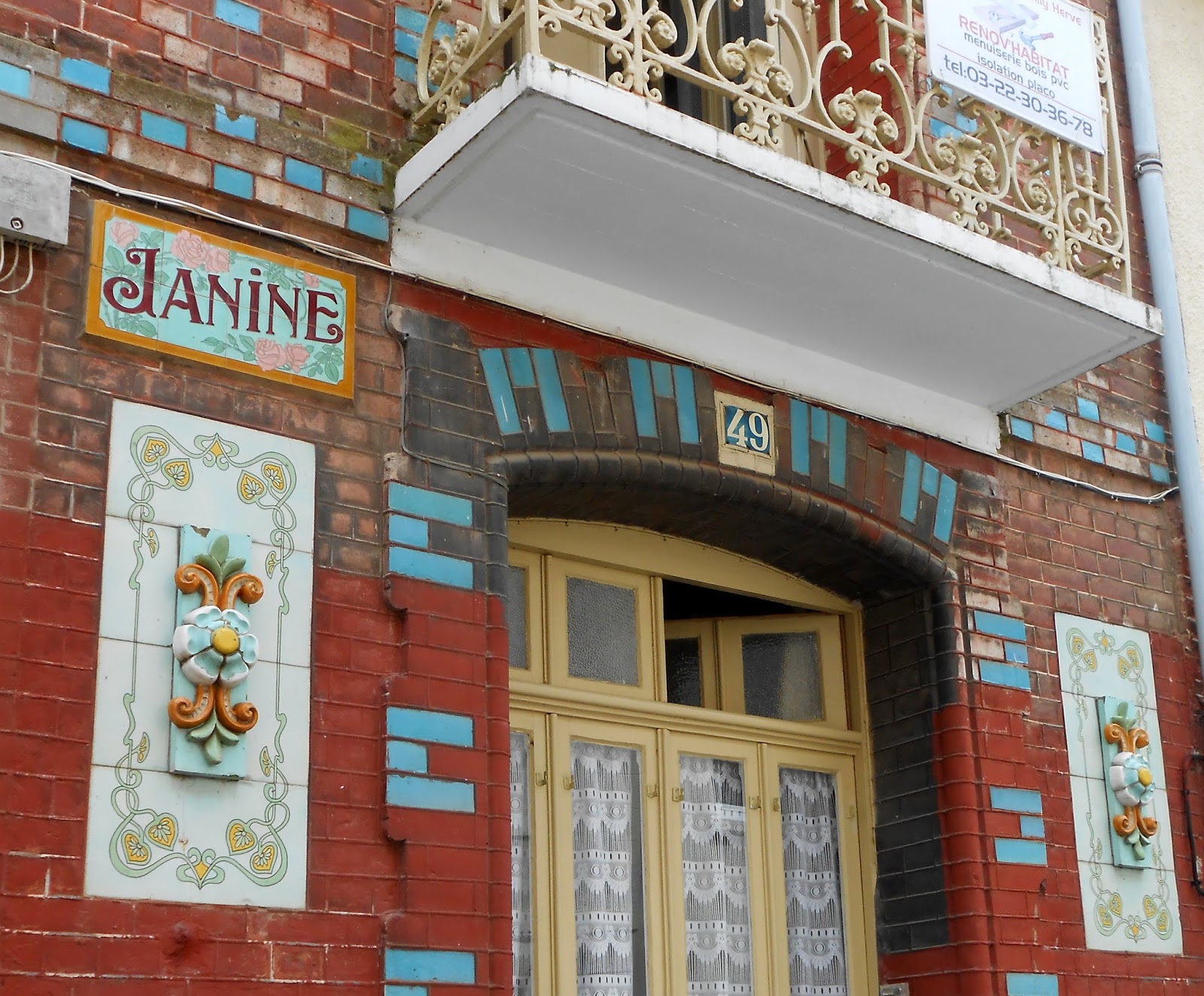
| A sculpted corner feature on a building in Troyes (but not the Hôtel-Dieu)... |