Showing posts with label Toadstools and Fungi. Show all posts

Sunday, September 30, 2018

Thistles and Toadstools...


A beautiful walk in the autumnal woods for the last day of September, complete with ferns, fungi and fleeing deer in the distance...


On the way there, tall thistles rose up proudly from the hedgerows, towards the sun, whilst in the woods, toadstools and fungi formed mysterious clusters on the shaded floor.


No sight of any wild boar; although their traces were everywhere, as were the hunters, out in force, in other parts of the woods, fortunately.


Friday, June 3, 2016

A Forest of Faux at Verzy...


The wet weather here has in no way let up, so I decided to see what all this rain looks like in the wilds. The Forest of Verzy is not far from Reims and its key attraction, the Faux (beech trees) do indeed look just as striking in the summer months, in full folliage, as they do during the barren winter period.


They just happen to be a little harder to locate when covered in a very green cloak of leaves!


The Faux domaine is said to be set in the gardens of an early abbey, from the 7th century, itself marking the site where a certain Lorrain evangelist, Saint Basle, had lived as a hermit.


Nothing remains today of this edifice that was destroyed during the Revolution years. The only link back to these origins are these strangely twisted, dwarf trees themselves - les faux - which may initially have come from the Lorraine region of France.


Indeed, apart from the relative wealth of Faux here in Verzy, this natural phenomenon is to be found in very few places around Europe (near Hanover in Germany and Malmö in Sweden).


 In spite of scientific research, the actual emergence of these trees remains somewhat a mystery, although a similar process of growth can be seen in certain forms of oak and chestnut.


A unique genetic composition is at the source of the phenomenon, but the tortillard effect is not always transmitted by seed (les faïnes) , of which few are fertile. Reproduction is also carried out by the formation of runners (le marcottage), which means that branches (les marcottes) grow out along the forest floor, taking root and creating off-shoot Faux, rather like ivy or honeysuckle.

The more usual trees...
Alternatively, a new Fau may grow from the formation of a long-running root (le drageonnage), which finally gains autonomy as a drageon from the parent tree.

Very wet underfoot!
Of course, there have been suggestions that the Faux are in fact fairy trees. Hmm... Well, what certainly was magical, was the effect of all that greenery, dripping with water.


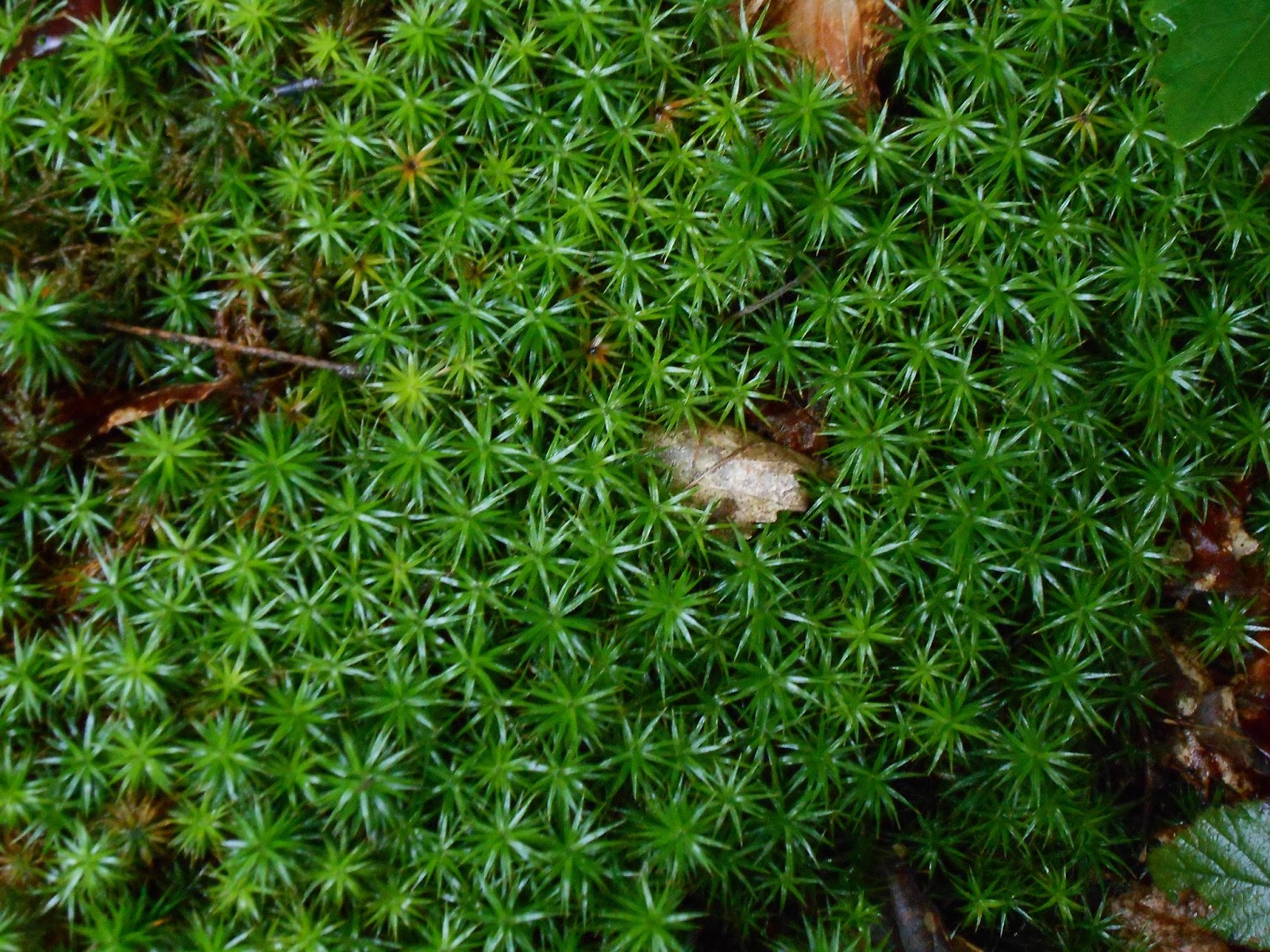
Mosses, unfurled bracken, ferns and fungi...


All vying for space on the forest floor.


It's amazing how many shades of colour can be incorporated in the humblest form of 'greenery'.


Some of these growing forms looked like strange frilled flowers, or even frost...


These really were distinctly soggy, but still beautiful...


As were some of the local inhabitants, in their own slimy, soggy right!


Then, of course, there were the more traditional forms of flowering beauty...


And finally those majestic ferns, with their branched forms that just remind me of flying buttresses on Gothic cathedrals...


Wednesday, October 29, 2014

Fauna in the Mountains of Paris and the Champagne region...


I know of two 'mountains' here that don't immediately strike me as meriting such an imposing title. I had the pleasure of visiting both of these with blue skies above. The first of these is the Montagne Sainte-Geneviève in Paris, the summit of which is occupied by the Panthéon, and whose flanks house La Sorbonne in the Latin Quarter.


The façade featured above is to be found in Rue Mouffetard, one of the oldest and most original neighbourhoods in the city, preserved from Baron Haussmann's vast urban redevelopment project under Napoléon III that swept away much of Medieval Paris.


The beautiful façade is to be found on a building that dates back to the 17th century, although the artwork itself is in fact from the late 1920's. The four panels present different scènes champêtres, featuring a variety of beasts, birds and burgeoning forms of vegetation in a style that refers back to the Renaissance. The artwork was realised with the Italian technique of sgraffito, wherein the plaster is scraped (graffiare = to scratch) to build up a relief.


The façade was created by a certain Italian artist, Eldi Gueri, commissioned by the charcuterie Facchetti at a time when the sgraffito technique had a certain popularity, not just in France but in other European countries too. The charcuterie shop no longer exists, but the premises are now occupied by the fromagerie Androuet. The owners have commissioned their own painted panels, below the 1920s masterpiece, but the result is rather 'cheesy', it has to be said, which is why I cut them off the photo.


From one impressive façade to another, situated in the second mountain, la Montagne de Reims, with one its prestigious Champagne-producing villages....Rilly la Montagne.


 It is a highly-coveted area in which to live, with some beautiful old houses whose domains reflect the wealth of the champagne vignerons, past and present.


Naturally, the vineyards themselves no longer have any grapes, following the harvest period, but the vines are striking with their beautiful autumnal leaves.


Again, the slopes of this mountain generally seem more like those of a hill.


At the end of the day, the autumn colours appeared more radiant, and despite the fading daylight, there were treasures to be found in the undergrowth.


Several amateur mushroom hunters were gathering edible treasures, but these precious mushrooms seemed to be outnumbered by their highly toxic relatives.


Many of these toadstools were worthy of a fairytale, clustered together in deadly toxicity....


Their bright forms occasionally gnawed by some creature, though probably not the wild boar that populate the woods.


Others were just perfect in their fatal beauty...


Certain toolstools were more subtle in form and colour, but certainly just as deadly as the more flamboyant varieties.


Some appeared to be shrouded in ashy lace, delicately toxic...


Others appeared to lead away from the main track, as luminous, ghostly forms in the dusk...


Sadly I didn't see any beasts in the wilderness, but not for the lack of trying...


But I did manage to see their traces; here are wild boar (sanglier) tracks in the mud... And I did get very muddy trudging up and down the slopes, but it was worth it.


Well, no beasts sighted, with the exception of this tame, feline specimen...


Thursday, April 18, 2013

Wild flowers in the woods...

Gentiana
I'm sure it must have been the same in the UK too, but over here spring seemed to arrive overnight, waking up the plants and hibernating butterflies alike. In the woods I came across the usual springtime wildflowers along with a few that I had never seen before, such as the one here.


Gentiana has long been used for its medicinal properties concerning digestive problems, but its roots also serve as a key ingredient in tonic drinks and act as flavouring for several French liqueurs (Suze, amongst others) along with certain Polish vodkas.

I liked the downy stems and leaves...
I had just been hoping to find some violets and therefore was very surprised to stumble across this beautiful royal purple flower which seemed more suited to alpine areas. The leaves look like those of cultivated anemones, or the wild ones that were to be seen everywhere.

Cultivated anemone that wasn't to be found in the woods!
The violets were certainly out in great number, situated in the every spot likely to catch the sunlight. The colours were magical since apart from their bright-green furled leaves, there was not much green foliage and most of the buds had not even burst open on the trees....


Unfortunately my camera just can't cope with the combination of the violets' colour and sunlight and so I can never do the beauty of these flowers any justice!

Purple blurr...
This time there was a carpet of what I assume were periwinkle flowers...


Their jewel-like colours, with bold petals and bright, waxy leaves lit up the woodland floor.


Meanwhile the wood anemones studded other spaces with the delicate white petals...

Wood anemones
While I was looking at the flowers I suddenly caught sight of a deer leaping away in the undergrowth. The woodland is maintained throughout the year, to keep it in order and to provide timber, but this also makes it hunter-friendly.

Pink blush on the underside of the petals...
 The whole area is criss-crossed with heavy-duty tracks for the smooth passage of foresters and walkers alike, but also facilitates the 'work' of these hunters, who come back with trucks laden with their game - usually the wild boar that populate the woods.

The innocent-looking wood anemone...
All of this means that the woods do not really give you the impression of being very wild, although I would not like to cross tracks with a boar! The most popular areas can seem quite tame, with fencing, car parks etc and can get busy at the weekends. However it is easy to lose your way as the paths look very similar...

Cowslips and anemones
Clusters of cowslips with their tall, furry stems and bunched-up flowers were scattered everywhere. These are probably a little more friendly to their human admirers than the anemone which is said to have toxic substances that act as an irritant.


Of course the cowslips look like elongated versions of the primrose... Their pastel colours are a little more subtle than the other yellows that I came across...

Coltsfoot  (I think...)
The coltsfoot head is a little like the dandelion, without the smooth stem and rich leaves of course...


The bright, sunny yellow is the same as the dandelion's however, and is reflected in the colour of celandines too...

Celandines

And in the golden pollen exploding from the catkins too...


All of this springtime colour was quite in contrast with the bare-branched trees, and the dried-leaf litter on the ground...


However, there were a few treasures to be seen, left over from the winter months...


A thistly crown... and strange forms...


A cleft-footed tree trunk, and curious gemstones...

Fungus lace!
 The colours of these reminded me of slices of geode...


I forgot to touch them to feel their texture. The one below should feel like paper or bark...


This one has seaweed colours, but I don't know if it was actually slimy to the touch....


However, I did touch the frogspawn below, which felt just as gelatinous as it looks on the photo!


I didn't find any toadspawn (no future princes to be had), but I did find the entrance to a fairy-tale castle...


And I discovered the mysterious ruin of a summer house, or hunter's lodge...

Clad in ivy, of course, which keeps its jewel-coloured leaves all year round...


I'm sure that all the trees now have their tender young leaves unfurled from the buds so the woods must have been transformed again since last weekend.

We don't have a garden anymore, but I did successfully transport some of our old violet plants from the house before leaving, so we do have a mini-spring time on our window ledge... All I'm waiting for now are the blue tits.