Sunday, January 26, 2014

The Carnegie Library of Reims...

Detail of wrought iron window: Bibliothèque Carnegie.
Over Christmas I came across an exhibition, 'Sur les traces de Marcel Proust: La Champagne retrouvée' at one of the libraries in town. A few of the individuals mentioned were previously merely names that I had associated with streets around the city. 

These finally came alive as they were linked back to their eponym, through letters, manuscripts, photographs and drawings. All were traced back to Proust (1871-1922) himself, of course, and his visits to Reims and the Champagne region during the early Belle Epoque years. Some of the individuals he frequented here were to be the inspiration for characters within his work. It is even said that the catalyst to the Proustian memory process had initially been a biscuit, rather than the eventual madeleine  cake. If so, it may well have been a biscuit rose, speciality of Reims intended to be eaten when sipping champagne, of which there are several references in his work.
 
Side view of the library showing the cathedral transept and the Palais du Tau.

The beauty of the royal city with the majesty of its cathedral in the pre-war years also marked Proust. As part of his translation work of the writings of English art critic John Ruskin, he went on several 'Ruskinian pilgrimages' to study and admire architecture. Proust was sensitive to the imposing Gothic forms of Notre-Dame de Reims and the image of fine intricacy playing alongside structural density is apparent in his writing. He indeed later referred to A la Recherche du Temps Perdu as his 'cathedral'. 
Rear view of the library - view towards the cathedral facade.
Proust was particularly affected by the atmospheric painting of Paul-César Helleu - 'Intérieur de la cathédrale de Reims' with its image of light pouring through the stained-glass windows. This work, with its myriad of colours flowing onto the stone paving inside the cathedral is referred to by one of Proust's characters in A la Recherche . 
Intérieur de la cathédrale de Reims: Paul-César Helleu( http://www.helleu.org/ Les Amis de P-C Helleu)
The art of Helleu in general, with its studies of mondain social butterflies seems to reflect the world Proust captured in his writing. Yet this was a world that was soon to come to an end with the onset of the First World War, and nowhere would this be felt more cruelly than Reims.
 
Exterior of reading room.
 From the beginning of the hostilities, the cathedral was a prime target. From symbolic image of the power of the French nation and its regal past, it soon came to epitomize the suffering of the French people. Repeated attacks by the enemy forces bombed, battered and burnt the cathedral from every angle from the very start of the war until its end in 1918. 


Even soldiers who sought refuge within the sacred edifice itself were not safe from cannon strikes as the scarred stone pillars attest today. Reims cathedral came to represent French resilience and martyrdom. Initial plans to keep the cathedral in its ruined state as testimony of the barbaric determination of its assailants were fortunately abandoned in favour of its reconstruction in the post-war years.
 
Double doors at entrance
 One hundred years later, it is certainly difficult to imagine the desolation of this beautiful site in Proust's life. The city itself had been almost totally destroyed. During the four years, 80% of the buildings were flattened under enemy strikes or burnt out, leaving a landscape of rubble, punctuated by the odd wall or edifice left standing in defiance. 
Mosaic work around the main door
The majority of civilians had left their homes in September 1914, and those that remained in the ravaged city inhabited the numerous cellars dug into the chalky terrain specific to the Champagne region. By 1917, the population was a mere handful of hardy individuals but little by little the influx grew and a huge reconstruction programme was under way in the 1920s. 
 
Side door at the library entrance.
Freed from certain aesthetic constraints, the new buildings were able to follow contemporary currents. This gave rise to significant diversity as individuals sought to leave their own mark and new architectural styles rose up alongside more classical themes and references. Art Déco was, however, the most significant of these. Looking up at the facades of buildings of Reims, we can still see the geometric forms and details that typify this style. One of the best examples of this in Reims is the library presently showing the Proust exhibition.
 
Hall of the library with central fountain.

Situated on the Place Carnegie, behind the east end of the cathedral and to the rear of the Palais du Tau, the Bibliothèque Carnegie was built during the wave of reconstruction in the 1920s. This would replace the first library that had been destroyed during the war years, and give it a new location, no longer within the Hôtel de Ville itself. 


The architect in charge of the mission, Max Sainsaulieu (1870-1953), had already been closely linked to the protection of the cathedral. Prior to the war, Sainsaulieu had come to Reims to take over the work of his architect father-in-law, Alphonse Gossuet, himself responsible for several buildings in the city - the most notable being the Grand Théâtre de Reims and buildings of the champagne house Pommery.

'Zenithal' glass lantern above the fountain - Jacques Simon.
In his function as architect appointed to safeguard the cathedral, the younger architect's powers were limited in view of the force and duration of the enemy onslaught.
 
One of many mural mosaics in the entrance hall.
Marble flooring


He was injured by a bomb during the evacuation of certain artefacts in 1917. This act of dedication earned him the title of knight of the Légion d'Honneur.

Reading room at the library.
 Already in a poor state of repair and under restoration before the outbreak of war, the stained-glass windows were not removed since it was believed that the hostilities would quickly end. 
Sadly, the war years were all but short and brutish; they were merciless and protracted. As part of his work, Sainsaulieu was thus obliged to report the damage to the cathedral and witness first-hand its heart-breaking, systematic destruction from 1915-1918. 

Following the desecration of the city, parts of its ambitious reconstruction project were largely made possible thanks to the philanthropy of certain American figures. The American Memorial Hospital, founded in 1925 by the Rockefeller Foundation (American Fund for French Wounded) was set up to deal with physical suffering. 

Reading room with the stained-glass windows of Jacques Simon.

The Bibliothèque Carnegie was founded in order to fight against the barbarism born of ignorance. Taking the Latin saying "Educunt folia fructum" as its motto, the library sought to give access to learning to the general public. "Flowers lead to fruit"; education could elevate the mind of each being and therefore lead a new civilisation to fruition, preventing further wars.

Detail of reading room window.

 The funds for this project came from the Dotation Carnegie pour la Paix Internationale, part of a vast trust fund set up by the philantrophist Andrew Carnegie (1835-1919). Of Scottish origins, Carnegie was labelled 'the richest man in the world' at the turn of the century, having made his fortune in the railroad and steel industry. Since the earliest age he understood the importance of learning, the value of books and the injustice of a library system that closed its doors to the wider, less-privileged public. 

 
Stained-glass skylight: Jacques Gruber.

 Carnegie therefore vowed to create free public reading rooms and libraries and aid other cultural institutions for the enlightenment of the people and the "improvement of Mankind". The Carnegie Music Hall of New York is probably the most famous of these, but in fact its name is rarely associated with the man behind its creation in 1891. Carnegie's cultural mission led to the building of 3,000 public libraries, the first of these opening in his hometown of Dunfermline, Scotland in 1883, whilst 1928 saw the inauguration of the Bibliothèque Carnegie de Reims. 

Having received a considerable sum of money from the Carnegie association, plans started to be drawn up for the new library of Reims from 1920. Initially, the architect Sainsaulieu had a rather classical vision for the new building, yet adopted an Art Déco style after a trip around certain European cities during which he observed contemporary architectural influences. 
 
Detail of skylight.
The resulting building is indeed a temple to learning, sober yet not intimidating. From the simple wrought iron gates and symmetrically laid-out garden, steps lead up to the main entrance. This impressive facade literally and symbolically leads the visitor towards knowledge and elevation. Not only this, the facade belies the actual form of the library itself, which is in fact semi-cylindrical in shape at the back of its structure. 
Small part of the index card room.
Two pilasters hold up the pediment of the facade which is undecorated except for its clear inscription 'Bibliothèque' which appears to grow up from the two engraved laurel bushes below which represent the growth of the mind. 
 
Index card for Proust's work.
The entrance is flanked by two flags in bas-relief which refer back to the American contribution and the display the heraldic shield of Reims. The city's motto calls for Divine protection, 'Dieu en soit garde'', whilst the American eagle is shown beneath the original American motto 'E pluribus unum' (signifying 'Out of many, one').

 
Oak and mahogany parquet in the exhibition room.
 Rich geometric mosaic work decorates the imposing doorway sheltered beneath the entrance, as rich patterns run up and along the walls and are echoed in the floor design too. This intricate harmony is further enhanced by the beautiful iron work on the windows and on and around the two parts of the door. The delicate metalwork creates a solid yet light impression as the light passes through, and reflects off the glass below. The great door, designed by the Schwartz-Haumont establishment won a gold medal at the Exposition Internationale des Arts Décoratifs in Paris 1925. 


  Once beyond the great doors, the visitor enters the entrance hall. This area continues the effect of luminosity and lightness offset by a sober weightiness. 


 The walls are composed of panels of Algerian onyx which are framed by green marble bands, and bear twenty mosaic images (by Henri Sauvage) which represent the manual, physical and intellectual activities of Man.

Detail of handrail.
Geometric, linear forms continue throughout but are counterbalanced by a vivid wall decoration featuring bubble-like circles, that overlap each other and seem to rise towards the ceiling and lead the eyes upwards. Indeed, above the central fountain set in the marble flooring to symbolize "the source of all science and knowledge" (Sainsaulieu) is a magnificent Art Déco hanging glass lantern. 
 
E Pluribus unum: Library facade.
Created by Jacques Simon, this beautiful chandelier dominates the whole space. Opposite the entrance doors is the reception desk, today in oak, yet formerly made of marble. Housed behind this area is the library's collections, set out over five levels in a star formation to accommodate the semi-circular form of the building. 

Dieu en soit garde: motto of the city of Reims.
Since 2005, the Bibliothèque Carnegie is no longer the main library in the town centre; the Bibliothèque Falala situated just in front of the cathedral has taken on this role. Despite this, the old index card system is still in place, with countless wooden drawers containing thousands of classified references to archived documents. Likewise, the reading rooms in the old library still offer visitors an invaluable study area in an atmosphere that has changed little over the years in spite of renovation work. Indeed, this room, with its oak parquet flooring, mahogany wall panels and shelves that lead up to a second open gallery all serve to create a timeless impression. The ancient volumes that line the walls and surround the study desks are all bathed in light coming from the vast stained glass panel above and the three lateral bay windows at the far end of the room. 

Library facade.
 The stained glass overhead, designed by Jacques Gruber, depicts a book opened onto the heraldic arms of the city whilst the other windows are of a simple design in frosted glas, created by Jacques Simon. The exhibition room, with its complex mosaic parquet of oak and mahogany and subtle Art Déco features, enables the library to continue its objective of educating the public through regular displays that highlight the cultural heritage of the city. The creation of two other major libraries just over a decade ago has enabled the Carnegie to devote itself to the conservation of its collections and benefit from a significant restoration and renovation project of its entire building. 

Rear of the library.
Meanwhile, restoration of the cathedral itself continues today. Intricate stonework and sculpture re-emerge from the layers of grime, or are wholly restored to their former glory. That the cathedral has survived this far, 100 years after its desecration in the war years seems nothing short of miraculous. The devotion of the architect Henri Deneux (1874-1969) led to the extensive restoration work of the inter-war years. This was partly financed by national and international associations such as the Rheims Cathedral Restoration Fund . Meanwhile donations from the oil magnate John D Rockefeller provided the funds necessary to rebuild the cathedral roof in the 1930s with an innovative use of reinforced concrete. The year 2014 will mark the centenary of the beginning of the First World War and for me both the Bibliothèque Carnegie and Reims cathedral reflect the very best and worst in Mankind. Both show Man's ability to create and share his 'wealth' in every sense of the term - aesthetic, cultural, social and financial. Yet these edifices also underline a drive in Man for destruction that unleashes itself whenever wealth is simply associated with material, economic or political power. When this happens it seems that the human is stripped from humanity. The worth of philanthropic gestures is immeasurable as these not only enable invaluable work to be carried out, but more importantly restore vital faith in humanity. What a shame, disgrace even, that many of those today with great wealth should be so poor in their vision and spirit, and are unable or unwilling to see beyond the latest vacuous material gadget, or narcissistic gaze in the mirror or social network. 
Plaque at library entrance.
Here's a long quote by Andrew Carnegie which I would expand on, if I could, to include the natural world and all living organisms since these are too often overlooked as we focus on the needs and desires of Man.

“This, then, is held to be the duty of the man of wealth: To set an example of modest, unostentatious living, shunning display or extravagance; to provide moderately for the legitimate wants of those dependent on him; and, after doing so, to consider all surplus revenues which come to him simply as trust funds, which he is called upon to administer, and strictly bound as a matter of duty to administer in the manner which, in his judgement, is best calculated to produce the most beneficial results for the community-the man of wealth thus becoming the mere trustee and agent for his poorer brethren, bringing to their service his superior wisdom, experience, and ability to administer, doing for them better than they would or could do for themselves.”

Bust of Andrew Carnegie in front of the Bibliothèque Carnegie.

Wednesday, January 1, 2014

Bewitched woods for the New Year...


Despite the title of the post, the woods didn't actually look particularly bewitched, or dark for that matter but having heard The Rite of Spring by Stravinsky the other day I was looking for any excuse to include it on a post. And of course, I do love the very particular beech woods not far from the city.


 The trees there look very atmospheric at any time of year, with their strange, twisted branches and tortured forms. However, their unique silhouette appears even more bizarre in the winter months. The particular history of this specific tree I mentioned a few years ago, in a post called The Weird Faux de Verzy. 


 This time I chose black and white, but in fact there was iridescent green moss growing on trunks and boughs alike and bright red berries in the skeletal undergrowth or the swathes in the branches above.


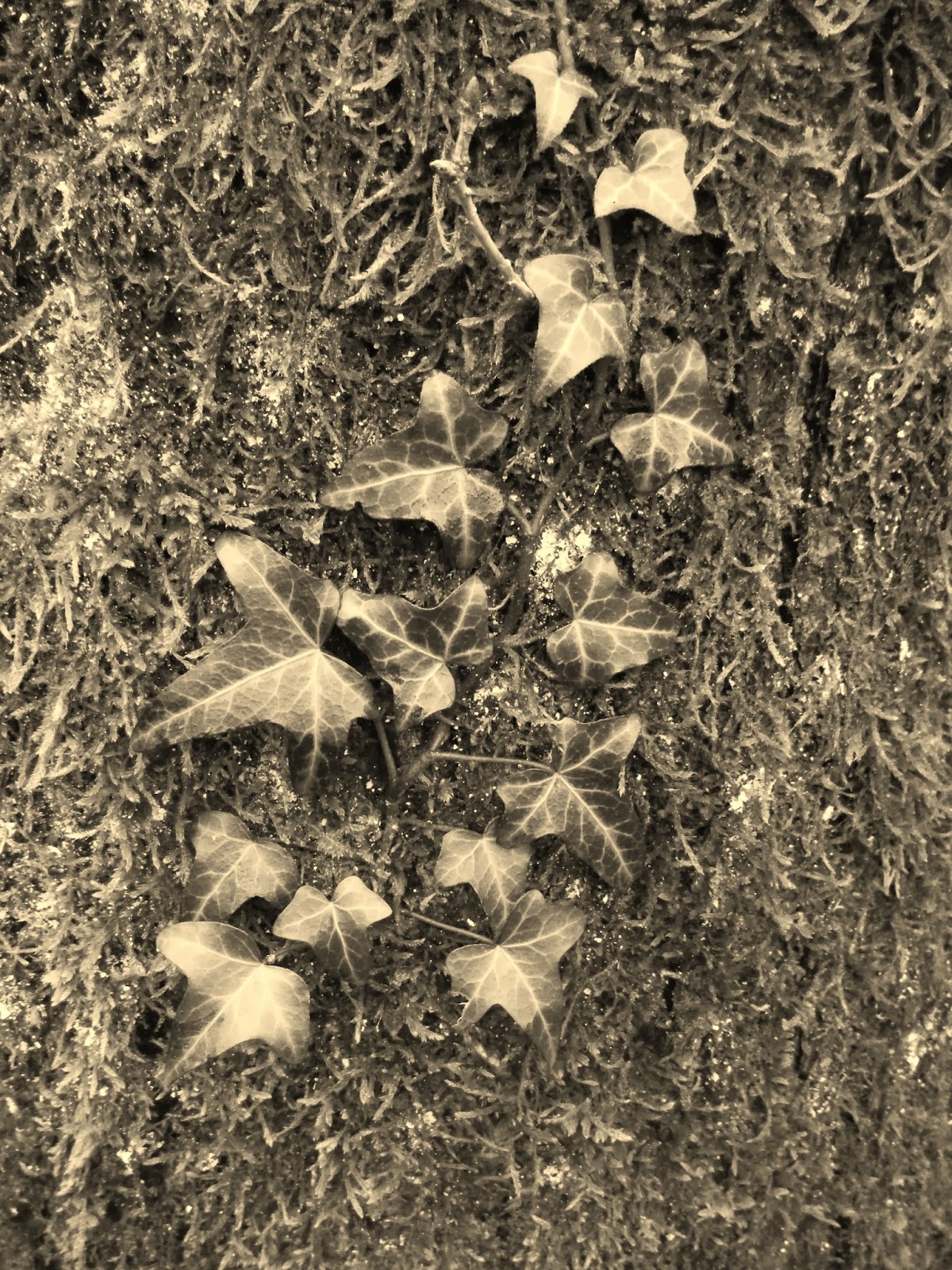
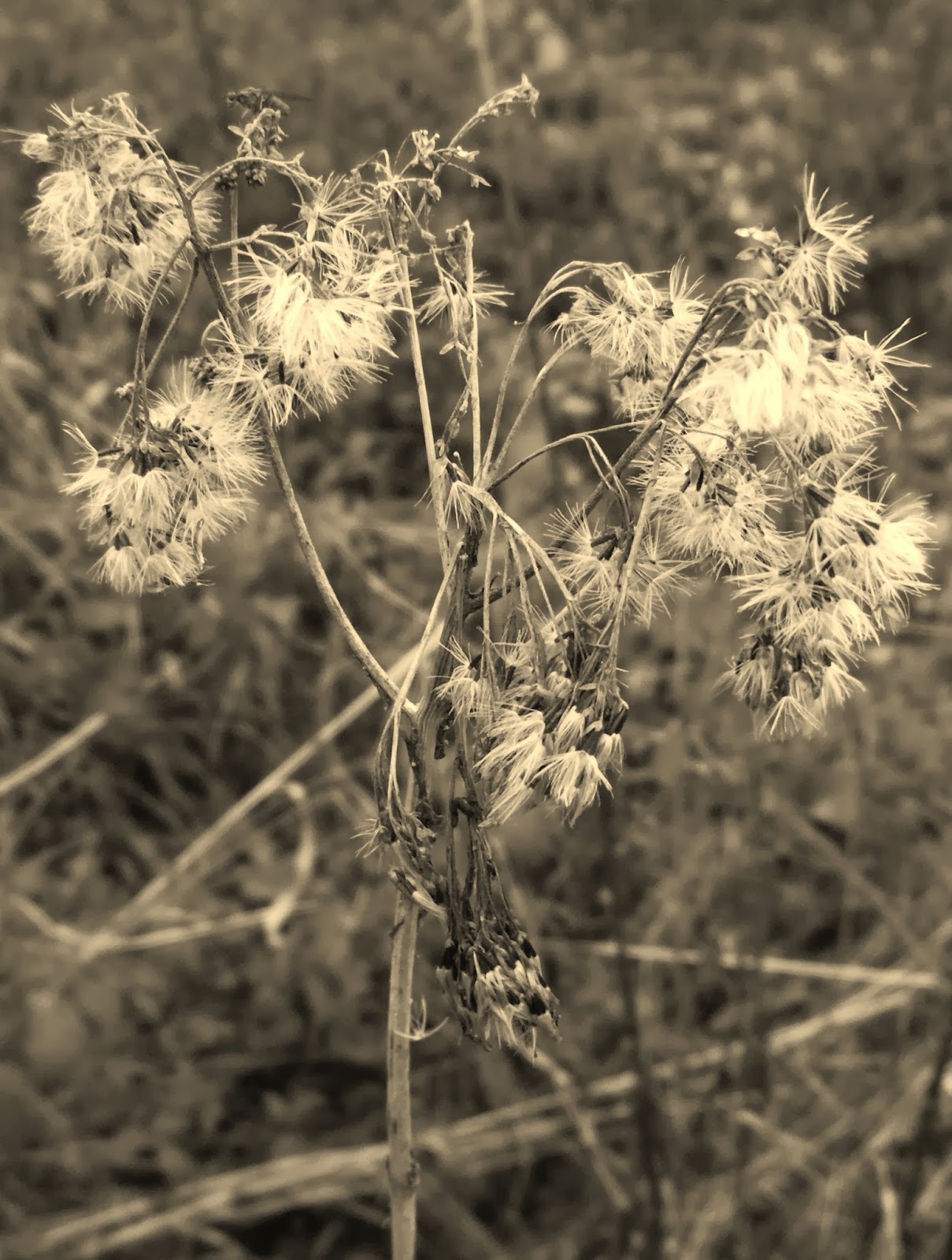
 Not to mention the ever-green of the ivy creeping upwards or the fluffy seed down that still clings onto the plants, long after the autumn.


I was tempted to blow on the seeds to make a New Year wish...


And that was when the notion of witchery came into play. For in spite of my will for change, it seems that some changes just won't occur unaided; resolution isn't enough. So I would love to perform some kind of magical feat. And the atmosphere in these woods would surely capture the mood...


May your New Year bring you serenity and beauty around you!

Wednesday, December 25, 2013

La Sainte-Chapelle of Paris...


In the 14th century, a Parisian scholar remarked that on venturing into the sacred edifice of La Sainte-Chapelle, "one understandably believes oneself, as if rapt to heaven, to enter one of the best chambers of Paradise." While others have been a little more reserved in their praise, La Sainte-Chapelle is widely considered to be the jewel of Gothic rayonnante architecture. 
Situated on the Ile de la Cité in the heart of Paris, it was constructed in the mid-13th century as a chapel for the Capetian royal palace, of which little remains today. Sainte-Chapelle is now surrounded by the Palais de Justice, which continued the regal function of hearing the pleadings of aristocracy from the royal lit de justice. The Conciergerie is the principal palatial vestige, ironically becoming a prison to hold those of noble blood before they faced the guillotine during the Revolution years. Marie-Antoinette was, of course, one of its most famous inmates. 

This dark, sinister past, along with the austere buildings that obscure the chapel from view give no indication to the creation of luminosity that lies behind the imposing walls. Even when you enter the central area, the rather modest exterior of Sainte-Chapelle, with the sobriety of its façade belie the breath-taking splendour within. There are no flying buttresses or lavish sculpture to indicate what lies beyond, and the gargoyles that peer down give no hint to what is hiding below. 
For above all, this royal chapel was conceived to be an exquisite jewellery box that had to be opened in order to reveal its treasures. This was a reliquary 'turned in on itself', created to house the Holy relics that acted as the jewels in the crown of Louis IX and underlined the sacred lineage of this future saint. 
The worldly and spiritual might of Louis (1214-1270) were mirrored in the magnificence of the architecture and decoration of the chapel interior, and were again reflected and refracted through the very themes of that decor.
 The basis of this was the play of a seemingly spiritual light on the terrestrial glass structure that led to the illumination of this jewelled structure and the elevation of the mortal to higher planes. 
The 600 m2 of stained glass creates the impression of a vast, vertical expanse of gem-stone luminosity. Fifteen intricate glass panels and a huge rose window of flamboyant tracery (c.1490) encase this space, but lift the eyes of all towards the vaulted ceiling above, creating an impression of ascension and weightlessness. 
This intricate cage was ingenuously crafted following the spatial examples of earlier chapels such as those at Amiens cathedral and at Aachen. More significant too was the influence of contemporary metalworkers, such as the Mosan goldsmiths of Northern France whose work may have inspired the use of two bands of metal in Sainte-Chapelle to encircle the structure.
 The brightly-coloured diaphanous shell was, in fact, firmly anchored to its base. Like Noyon cathedral, a two-storey structure is apparent. Indeed, the lower chapel for the palatial parishioners forms the foundation for its royal counterpart, with 14 pillars soundly rooted into its structure and crowned by stone and metal pinnacles far above. 

Although there is no specific trace of an architect for Sainte-Chapelle, Pierre de Montreuil, responsible for work carried out on the abbey of Saint-Denis and the cathedral of Notre-Dame, is often cited.
Beyond the rich stained-glass windows, every aesthetic means was employed to decorate the chapel to lavish effect. Any available space on the walls alongside, or on the vaults above, was painted in vivid colours that matched those of the windows - rather different to the more subdued tones used in the 19th century restoration. 
Textile hangings and furthermore huge sculptures of the twelve Apostles completed the visual impact of Sainte-Chapelle. Nevertheless, the stained-glass windows remained first and foremost key to the full symbolism of the chapel. 
Whilst several of the window panels deal with scenes from the New Testament, notably in the eastern apse, others in the nave feature images of monarchs. The vital role of Louis IX is highlighted in other scenes which represent the king's determined retrieval of the Holy relics and their transfer to Sainte-Chapelle itself. 
Many images are thought to have been inspired by the illuminated manuscript of the Bible of Toledo (the St Louis Bible). This was created for Louis IX, on the request of his mother, the Queen Consort of France, Blanche de Castile (1188-1252). 
King and Christ are portrayed in narrative scenes in order to seal the sacral kinship. Again, there is a play of mirrors as the glory of Louis is reflected within and amplified through this glorious looking glass. 
The whole conception of Sainte-Chapelle was part and parcel of a strategy that spanned most of Louis's life, and led to his death. On his coronation in Reims in 1226, the future role of Louis as 'Lieutenant of God on Earth' was acknowledged. As king of France - the 'eldest daughter of the Church' - it was Louis' divine duty to defend the Catholic faith. 
He went on two Crusades to the Holy Lands, in 1248 and 1270, the second leading to his final demise. Through his religious endeavours, Louis sought to present himself as a latter-day descendant of Emperor Charlemagne, the 'Father of Europe'. With the Holy Roman Empire in chaos, Louis portrayed himself as an eligible candidate as central monarch of Western Christendom. 
It was Louis' spiritual mission and his regal and political aspirations that led to his acquisition of several relics of inestimable worth. In fact, these did come at a very real price, for while others would simply pillage, the saintly Louis purchased his Passion relics from the Latin emperor at Constantinople, Beaudoin II, at huge cost. This took place in1239, after two years of negotiation, the Crown of Thorns being the most precious relic of all.
In the last stage of the transfer of the relics to Paris, it was Louis himself, symbolically dressed as a penitent, who carried them. From 1241, Louis further enlarged his collection by the addition of other Byzantium pieces which included fragments of the True Cross and the Holy Lance. A place of worship was required to unite this treasure temporarily kept in the Château of Vincennes and the Château de Saint-Germain-en-Laye. It was decided that a chapel would be built within the Palais de la Cité itself to house the relics, enabling the king to enter directly from the palace. The early plans were drawn up 1241, work commenced in 1246, and the consecration of La Sainte-Chapelle took place in 1248. 
No expense was spared to create a monument worthy of the prestigious relics. The fact that the reliquary chapel cost 40,000 livres to build and the initial relics came at the price of 135,000 livres gives a clear indication of their importance. A further 100,000 had been spent on a vast silver chest - la Grand-Châsse - to store the relics.
Of this vast aesthetic and spiritual wealth, only the intrinsic structure of Sainte-Chapelle has survived the centuries largely intact. Louis himself was canonized by the Roman Catholic Church and was pronounced saint in Orvieto in 1297. During his reign, the three petals of the fleur-de-lys were said to represent Faith, Wisdom and Chivalry, but throughout the years of the French Revolution the symbol was seen to represent everything that The Terror sought to overthrow. The end of the 18th century led to the dismantling, dispersion or destruction of much of the chapel's precious contents and decor. 
During the revolutionary years, the chapel was used as office for administrative purposes and for this reason it escaped the fate that its choir stalls, rood screen and spire met. Under Viollet-le-Duc, restoration work was completed on Sainte-Chapelle in 1855, notably with a new spire, and from 1862 is became a national historic monument. Today, the Sainte-Chapelle always seems to have a long queue of visitors which snakes along the street, rain or shine. The day I went, it was particularly cold and grey but the beauty shone through. Unfortunately, my camera was playing up, so many of the photos just do not do the chapel any justice whatsover. I intend to go back on a bright, sunny day. Roll on 2014 with a new list of New Year's Resolutions and above all, the intention to discover more marvels wherever I should find myself...

Until then, enjoy your Christmas!
 

Wednesday, December 18, 2013

Cathedrals of Frost...


I was trudging across a very unremarkable car park in last week's cold weather, when I noticed the beautiful dewdrops attached like intricate beadwork on the spiders' webs draped over the skeletal remains of plants.


 I returned the next day, but as the temperatures had plummeted overnight, everything had frozen. The droplets, as everything else, had turned to ice...


The bright winter's light gave a certain majesty to what had originally been unloved and unlovely scruffy weeds...


The light pouring through the stained glass windows of the cathedral drew me in closer, on the way home again. It seemed to emphasize the majestic weight of the whole, yet make this seem light and delicate. The rather animated angels also seemed to be chatting against this golden backdrop!

Here's a video, the image quality of which isn't great when put onto full screen. Haven't yet worked out how to improve on this, but still...


Friday, December 6, 2013

Cat allergies... Cats 'allergic' to each other... And happy endings!

Benjamin
I can't imagine life without some form of feline, or at least furry, friend. And I would certainly hate to think of any childhood deprived of such a thing. I do have a preference for cats, I suppose, because my first cat coloured my early years, although I remember being disappointed when he arrived on the scene one Christmas because I'd been hoping for a rabbit... As consolation (for me), the cat was named Benjamin after the Beatrix Potter character. As it turned out, having a Siamese cat suited me fine, especially as we had seen the Aristocats film, and so had got to know a thing or two about their cunning Oriental ways.
The haughty behaviour, quasi-evil traits, weird sense of humour and psychopathic sentiments were all irresistible, even to a child initially wanting a 'cute' fluffy bunny. And I shouldn't have worried; I didn't miss out on the rabbits... As a formidable feline hunter living in the countryside, he regularly managed to bring back roughed-up rabbits, mauled moles and numerous shrews that he didn't even bother to nibble before devouring (don't ask me how I know...). Yet despite his murderous tendencies, Ben was a great friend to me, even if not always very well behaved, and was certainly a devoted companion. He was also the first to religiously home in on any visitor that declared that they 'didn't like cats', not to mention those with allergies, and was, of course, always ready to give any self-confessed 'cat-lover' a very wide berth. He lived through almost all my teenage years, and finally died during my first year at university, kindly doing so when I was home and able to say goodbye to him, with all the fondness and due respect he truly deserved.
Fast forward almost 11 years, to when I found the essence of Benjamin in my second Siamese cat, Pedro. The kooky, quirky traits, perverse behaviour, wanton disrespect of others, the drive to be positioned in the middle of any activity thus causing maximum disruption, the evident joy to be gleaned from sleeping in any warm place, regardless of any other consideration were all manifest in Pedro, multiplied and intensified because he was for the most part, a 'house cat'.
A generation down; Pedro
He enjoyed a saunter around the garden, and would take purposeful swipes at bats, butterflies and bugs of all kinds, given the chance, but only once caught and killed a bird. Who killed Cock Robin? Pedro. The official line to the children was that Pedro and the robin were 'playing', though I'm not sure they bought that... especially having had first-hand experience of his 'games' which invariably involved a deft scratch and fleeting bite. However, true to his Siamese genes, Pedro, just like Ben before him, was nothing if not a devoted companion, following the children and myself around the house, albeit ever-ready to mark out the lines again when those weren't respected the first time. Pedro became increasingly affectionate towards the children as the years passed, although that never extended itself to their passing friends, who may still remember being systematically scratched and bitten.
Pedro
This belated affectionate behaviour made it all the harder when it was officially declared that both children had cat allergies. Fortunately, we didn't have to take any action ('re-homing') and within less than two years poor Pedro had died of natural causes, in relatively old age. After this we entered the zombie-zone, of a cat-less existence... Until I heard of a hypo-allergenic breed of cat, that is...
Fast forward two years, subtract vast sums of money and finally greet Krasnogorsk Felix, the Siberian cat from the depths of the Loire region. Despite all my hopes, both children had truly awful allergic responses to our new furry friend, and for at least two months life was full of hankies and anti-histamines (inefficient). I despaired, and wondered how I could have been so stupid to take such a risk on every single level. However, little by little the situation improved considerably; Oggie became hypo-allergenic and/or the children less reactive.

Oggie
 Fast forward three years, subtract sightly less vast sums of money and greet a female feline companion for Oggie; Masha the Siberian from Switzerland. Fearing that Oggie was getting bored during his extended day-time hours of solitude, I thought a little company would be beneficial and so when the occasion presented itself, I seized it. Act in haste, repent in leisure... Well approximately six weeks of nail-biting leisure, as it turned out. Had I taken the time to do research on the very basics of cat behaviour, I would soon have realized that cats do not 'need' other felines to feel good. Quite the reverse; a cat feels good in his space, alone, on his own terms, and certainly doesn't appreciate another feline encroaching on this territory. Although I had gathered that it was best to introduce the new-comer very gradually, I really hadn't foreseen any particular problems. Perhaps I thought Oggie would find the kitten as endearing as we all did. He didn't. After an initial interest that seemed encouraging, Oggie soon began to regard Masha as an over-sized mouse, ready to be chased and thrown around at will. His will. Although Masha did try to give as much as she was given, there was no match...
There followed several weeks of intensive study of cat psychology, numerous videos watched for practical advice to accompany the minutes, hours, days and weeks of keeping the cats separated, yet together. But finally...


So, if the introduction doesn't go well, take as much time as you possibly can to get both cats used to each others' presence. Don't ever let the cats 'fight it out' alone. Only let them spend time together under strict supervision, preferably with food and toys to distract them should one cat get aggressive. Having a greedy hostile cat is definitely a bonus at this point. Trim the claws of the hostile cat, but not those of the other cat; a useful self-defense weapon, if needed. When you do decide to extend the introductions, keep the cats shut in the room with you, making sure that there are escape routes available (space under furniture). Let the cats spit and spar a little, but only if it doesn't appear too hostile on both sides, and preferably allowing them to use strategic vantage points - furniture and cat castles.

Masha
A little rough-and-tumble should establish how the land lies, but it shouldn't turn too feral. For all of the dramatic element, there shouldn't be any blood drawn, although expect the odd tuft of fluff to fly in the action. We watched the trilogy of Lord of Rings over many evenings in order to let the cats find their marks under our watchful gaze. As the Hobbits and dwarves were battling against the Orcs, Oggie and Masha thrashed it out around us, to great theatrical effect as their battles became more and more playful. From what I have seen, cat politics seems quite subtle; without anything apparent to us humans, one cat is able to establish itself as boss, and it isn't necessarily the cat who was initially hostile!
Should all of this process take longer than you anticipated, watch the videos of the genius cat b
behaviourist, Jackson Galaxy, on YouTube to find hope and inspiration... My Cat from Hell.

Masha

Sunday, December 1, 2013

December, at last!

Christ Church Gate - Canterbury Cathedral
Well, November was not a great month, but here's December at last, so things can surely only get better. Actually, a day trip to Canterbury yesterday ended the month in style, although not without its 'moments'. Coach-bound teenage girls + two-hour delay = frazzled nerves all round...

However, looking up at the façade of the entrance gate to the cathedral brought a little fleeting serenity, for me, at least. The bronze figure of Christ was placed in the central position in 1990, in order to fill the niche that had lain empty since the destruction of the original figure during the Civil War, in the time of Cromwell. Apparently this 20th century addition is thought to be a little unsuitable, due to its vibrant colour, but I think it's precisely this which brings out the beauty of the whole.

The entrance itself dates back to the beginning of the 16th century, built to mark the marriage of the eldest brother of Henry VIII, Arthur the Prince of Wales, and Catherine of Aragon in 1501. Unfortunately the newly-wed died the following year at the age of 15, thus dashing the Anglo-Spanish alliance against France, and leaving Catherine a widow. Despite hesitations on the part of both parties, Catherine was finally betrothed to Henry VIII in 1509. One can only wonder how history would have been different had Arthur never died, or if Henry VIII had been able to produce a male heir to the throne...